

You’re sitting across the table from your partner, and her mood suddenly shifts.
Her jaw tightens, eyes drop to her phone, with her arms crossed.
Your immediate thought - “She’s annoyed with me”.
The tightened jaw and crossing of her arms is what you perceived.
“Annoyed” is what you interpreted.
Confusing perception and interpretation is one of the most common mistakes people make about their own judgment, and the difference is critical to improving your discernment.
Perception is the dimension where discernment begins, before any meaning-making has started.
Perception is Active
Perception has a singular purpose: calculating what’s actually present.
You don’t simply receive information the way a bucket receives rain. You decide what you pay attention to — you notice some things and pass right over others.
What you perceive depends on what you’re already attuned to notice: your concerns at that moment, your expertise, your character, how open you are to new experiences.
Two people standing in the same room, looking at the same thing, don’t necessarily perceive the same material. That’s the starting condition every act of discernment.

What Active Perception Requires
Active perception requires the discipline of epoché—the deliberate suspension of assumptions, labels, prior judgments, and inherited interpretations long enough to encounter what is actually present.
Epoché does not ask us to erase context or pretend bias does not exist; it asks us to prevent those forces from reaching the conclusion before perception has done its work.
By holding back the impulse to or judge too quickly, we reduce the contamination of perception by ideology, identity, reputation, expectation, and prior belief.
That keeps your perceptive lens cleaner and preserves the path from observation to judgment.
Getting Better at Perception
Perception isn’t something you have or don’t have. Perception is closer to a muscle than a talent — the more deliberately you hone your perception skills, the better you get over time.
The most direct way to build your perception skill is this: before you begin interpreting what you think you see in a particular moment, ask yourself questions.
What’s actually happening around me right now, in this exact moment?
These questions pull you out of whatever you were rehearsing or replaying and back into the only place perception can actually happen — right here, right now.
If I’m observing a person, what am I observing about this person’s voice, face, and posture? Be purposeful and attentive.
What’s interesting about this moment, this person, this exact situation, that I might have missed in the past?
The purpose of these questions is to widen, for a moment, what you’re actually taking in before you move on to interpreting what any of it means.
Ask these questions enough times, in enough ordinary moments, and you’ll become more present and genuinely open to each waking moment.
How Perception Impacts Daily Life
Career is one of the best areas of life to reframe your work and performance , and the fix is simple. Ask most people to describe their performance at work over the last 90 days and they’ll answer with a feeling — solid, disappointing, better than last quarter. That feeling is already an interpretation, built on whatever the person happened to notice along the way, along with their current disposition. By the time their answer arrives as a feeling, the actual raw data points are mostly gone.
One habit changes that: keep a running list of key moments, accomplishments and setbacks, updated as it happens rather than reconstructed months later. Just the facts — a client who left, projects completed under budget and on-time, over quota production.
This list becomes what you perceive along the way, instead of a bias-ridden, subjective narrative. Now, when it comes to your annual evaluation, you have concrete data points to interpret, there’s something specific to work with — thirty actual things that happened versus a story to unravel.
Addiction and recovery is another area of life where changing what you perceive can be a matter of survival.
In active addiction, almost everything gets filtered through one question: will doing this get me what I need, or will I get caught?
This filter keeps someone constantly on guard for any sign of getting caught, while the real damage happening around them barely registers at all.
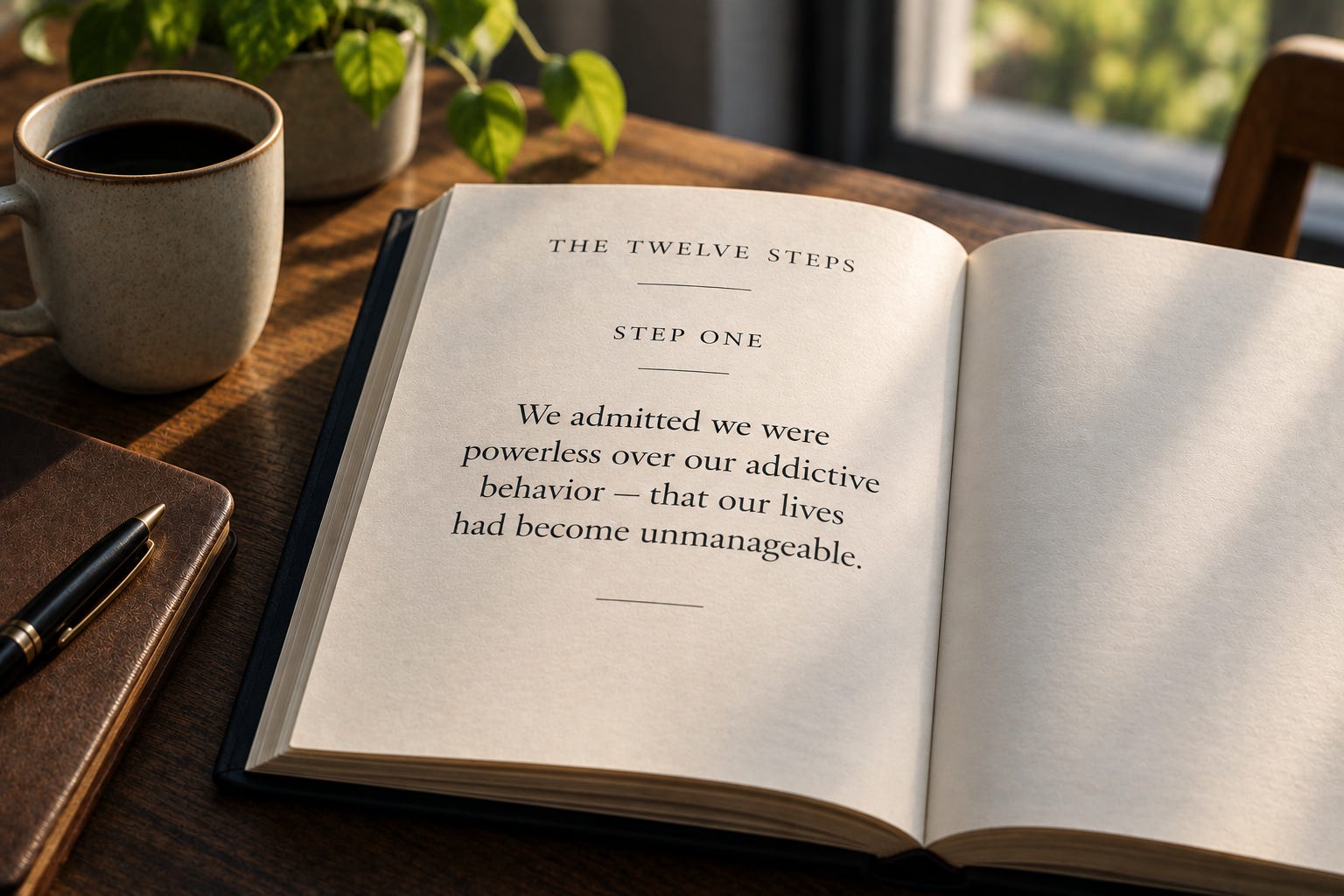
This is exactly why the first step of most recovery programs is admitting powerlessness, not as a moral confession but as an act of perception: seeing the actual situation instead of the story that's been protecting you from it.
Early recovery from addiction is, quite literally, perception coming back online — noticing, often for the first time in years, what the substance has actually cost and what’s actually underneath it.
The Concept of Perception in History
Two much older traditions built entire disciplines around Perception, and they converge on the same word for it.
The Stoics used the term prosoche to describe careful, deliberate attention to what’s actually in front of you, as distinct from how you interpret them.
Epictetus was blunt about where improvement actually comes from: not from what other people say or do, but from effort spent on proper attention.
Seneca made the same point about time: people don’t have too little of it, they waste what they have, because they aren’t attending to where it’s actually going.
Seneca, Moral Letters to Lucilius, Letter 1: “When we are inattentive, we miss it all.”
The practice tied to prosoche itself was concrete — pause during the day, ask what you’re actually experiencing right now versus the story layered on top of it, notice your own impressions before tying actions to any of them.
Ignatius of Loyola used the same word, centuries later, for a related but different task: noticing the interior movements happening inside you — what actually shifts in you when you imagine committing to one path versus another.
Ignatius treated this self-awareness and feedback loop as a skill that has to be built, not a gift some people happen to have, and he built a daily practice around it: the Examen, a nightly review of where your attention moved toward something life-giving that day and where it moved toward something draining.
Perception Is Foundational to Discernment
Perception comes first because everything that occurs along the Discernment loop from here is dependent upon it. Interpretation, Criterion, Telos, and Commitment each take from what you’ve perceived.
Your emotional state, how present you are, how attached you are to a particular outcome — all of it shapes your Perception before any deliberate reasoning begins. That’s exactly why presence, openness, attunement, and particularity matter as much as they do: when you are more present and attuned to the reality in front of you, it dramatically all the steps that follow.